
LifeAfter
NetEase GamesRole Playing
3.528.21K Reviews
- Version
- 5.0.737
- Installs
- 10.00M
- Age Rating
- Mature 17+
Screenshots
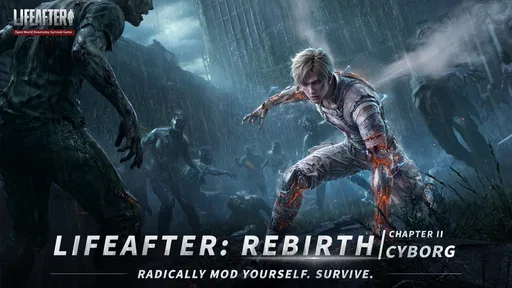
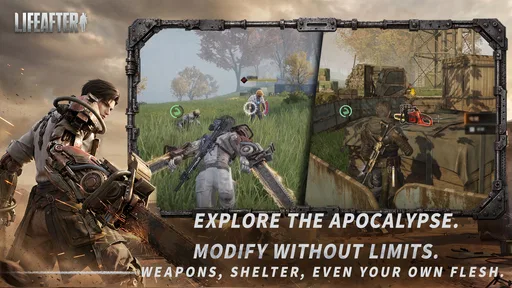

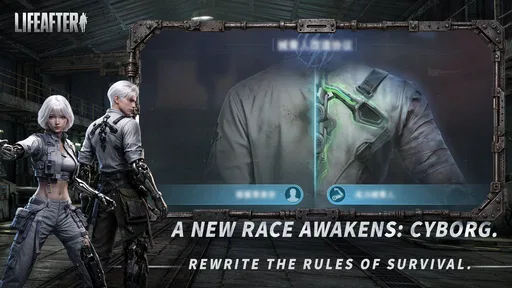
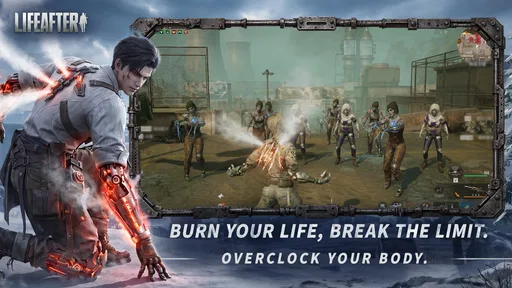
Our Review of LifeAfter
 Analysis by Appyee
I approached LifeAfter as a long-form mobile role-playing survival game rather than a quick game for filling a few spare minutes. Its central appeal is easy to understand: the world is dangerous, resources matter, and your character’s ability to adapt is part of the story. The phrase “Radically mod yourself. Survive.” captures that attitude, but the actual experience is more involved than a short slogan suggests.
Developed by NetEase Games, LifeAfter is free to download and play, with optional in-app purchases ranging from $0.99 to $99.99 per item. That makes the first decision simple: you can try the core experience without paying upfront. The harder question is whether its long-term progression, social demands, and mature atmosphere suit the way you like to play.
It is available for Android devices running at least Android 4.1, and the current version is 5.0.737. The game carries a Mature 17+ rating, which is important because this is not presented as a lighthearted cartoon adventure. The setting, survival pressure, and darker tone are aimed at older players. I would not recommend installing it casually for a younger player just because the download itself is free.
How the survival role-playing loop feels in practice
My first impression was that LifeAfter wants me to think beyond the next fight. Survival games can sometimes reduce everything to collecting materials and attacking whatever appears nearby, but this one frames progression around preparation. I have to consider what I am carrying, what I may need later, and whether an immediate reward is worth the risk of spending time or resources.
That creates a different rhythm from a conventional mobile role-playing game. In a typical character-focused title, I might concentrate mainly on upgrading equipment, choosing abilities, and moving through battles. Here, those concerns sit beside the practical questions of survival. Exploration is not just sightseeing, and returning safely can matter as much as reaching a destination.
The result is most enjoyable when I am in the mood for a slower, more deliberate game. A short session can still be useful, but the design makes more sense when I have enough attention to plan a route, manage supplies, and respond to setbacks. If I only want instant combat and a clearly marked chain of rewards, the survival layer may feel like unnecessary work.
One useful habit is to treat every expedition as a small budget. Before leaving, I consider which items are essential and which are merely tempting to collect. That simple distinction prevents a common frustration: filling space with materials that look valuable but do not help with the next immediate objective. In LifeAfter, restraint is often more useful than grabbing everything in sight.
I also found that returning from an area is part of the challenge, not just a transition between activities. The safest-looking decision is not always the most productive one, and pushing farther can create a better haul while increasing the chance of losing time or resources. That trade-off gives exploration more tension than a straightforward map-clearing game.
Why preparation matters more than reflexes
The game rewards players who build routines. I would check my available supplies, decide what kind of outing I was planning, and avoid treating every location as if it required the same approach. A combat-heavy trip calls for a different mindset from a gathering run, and mixing those goals without preparation can make both less efficient.
This is one of the less obvious strengths of the game: it encourages me to learn my own habits. Do I usually overpack? Do I stay too long because I want one more resource? Do I spend valuable items to solve a problem that patience would have solved? Those questions make the role-playing element feel personal, even when the underlying systems are familiar.
New players should resist the urge to chase every visible objective immediately. I had a better time when I focused on understanding the basic survival loop first, then expanded my ambitions. Trying to optimize everything from the beginning can turn the opening hours into a checklist instead of an adventure.
Another practical tip is to separate “progress” from “completion.” A successful session does not always mean clearing every task or collecting every possible item. Sometimes the best outcome is simply returning with enough materials to unlock the next useful improvement. That approach reduces wasted effort and makes the game’s longer progression feel more manageable.
Playing alone, then deciding how social to be
LifeAfter can appeal to players who enjoy the feeling of surviving in a wider world, but I would not describe it as an ideal choice for someone who wants a completely private, self-contained campaign. The broader experience is more convincing when I engage with the game’s community-oriented side, even if I prefer to make decisions independently.
That does not mean every player needs to become highly social. A cautious solo-minded player can still enjoy exploration and progression, especially when learning the systems. However, the game’s scale can make cooperation feel like a natural part of the experience rather than an optional decoration. If you dislike depending on other players, coordinating activity, or adjusting your pace to a shared environment, some of the appeal may be lost.
For an everyday example, imagine playing after work with a limited amount of time. I might begin by preparing for a short resource run instead of starting a complicated objective. If I notice that the trip is taking longer than expected, I can choose to return rather than gamble everything for a little extra progress. On another evening, with more time available, I could explore farther and treat the session as a larger project. That flexibility is valuable, but it requires me to make decisions rather than follow a completely automatic routine.
The social question also affects who should skip the game. If your ideal mobile role-playing experience is a tightly scripted story that can be completed at your own pace, LifeAfter may feel too open-ended and demanding. If you enjoy comparing approaches, adapting to a changing situation, and sharing a survival world with other players, it has a much stronger case.
What the free entry really means
The free price is a genuine advantage because it removes the upfront barrier. I can install the game, see whether its atmosphere and survival loop work for me, and make that decision before spending anything. For a player who is unsure about the genre, that is more useful than a paid download that asks for commitment immediately.
At the same time, “free” should not be confused with “free of every pressure.” LifeAfter includes optional purchases priced from $0.99 to $99.99 per item. I would approach those purchases carefully and decide first whether they improve my enjoyment or merely shorten a period of waiting and effort. The presence of a high-priced purchase range means budget-conscious players should set a personal limit before getting deeply invested.
This is where the game’s value depends on the player. Someone who enjoys earning progress through regular play may find the free access sufficient for trying the experience and deciding whether it deserves long-term attention. Someone who dislikes any temptation to spend, or who feels pressured when progression slows, may be more comfortable with a premium game that has a clearly defined purchase price.
I would not make a spending decision during a frustrating session. Survival games naturally create moments when I feel underprepared or blocked, and that is precisely when an optional purchase can seem most attractive. Waiting until I am calm makes it easier to judge whether I actually want the item or simply want the obstacle removed.
The fairest way to evaluate LifeAfter’s cost is therefore to separate three ideas. Access is free, optional purchases exist, and the personal value of those purchases depends on how much convenience or acceleration matters to you. The game is easy to sample, but players who want strict spending certainty should be cautious about settling into a purchase-driven routine.
Where the game earns its time
LifeAfter delivers value through atmosphere and decision-making more than through a single dramatic feature. I get a world that asks me to prepare, explore, recover, and improve. The satisfaction comes from seeing a difficult situation become manageable because I learned how to approach it, not simply because a number on my character sheet increased.
That makes the game a good fit for players who enjoy gradual mastery. The first time I understand why a trip failed, the next attempt feels more meaningful. I can change what I carry, alter my priorities, or stop pushing forward at the wrong moment. These small corrections create a sense of ownership that many faster mobile games do not emphasize.
Its role-playing identity also helps give structure to the survival premise. I am not only trying to stay alive in a hostile setting; I am developing a character and a longer-term way of operating within that setting. Players who like progression with consequences will probably appreciate this combination more than players who want a sequence of disconnected battles.
There is also value in the game’s ability to support different session lengths. A short visit can involve preparation or a focused task, while a longer session can become an extended expedition. That does not make every activity equally exciting, but it gives the game a useful place in a player’s routine. I can approach it as a brief check-in or a deeper evening game, provided I accept that the deeper experience rewards patience.
Trade-offs that become clearer over time
The same systems that make LifeAfter distinctive can also make it tiring. Resource management adds meaning to exploration, but it adds mental overhead too. If I am already exhausted, I may not want to compare supplies, estimate risk, and decide whether another objective is worth the effort. The game is not always relaxing in the way a casual mobile title can be.
Progression can also feel less direct than in a conventional role-playing game. When several needs compete for attention, I may know that I am improving without feeling that I am moving toward one clean, dramatic goal. Players who prefer constant rewards and highly visible milestones should understand this before investing serious time.
The mature rating matters beyond the age label. The overall tone is more suitable for adults who are comfortable with a darker survival setting. I would avoid recommending it to someone seeking a cheerful fantasy adventure, even if they normally enjoy role-playing games. The mood is an important part of the experience, not a minor cosmetic detail.
Device compatibility is broad on paper because the minimum Android requirement is Android 4.1, but a minimum operating-system figure should not be treated as a promise that every older device will provide an equally comfortable experience. Anyone using aging hardware should keep expectations realistic about smoothness and loading. I would test the game before buying anything, especially because the free entry makes that possible.
Another trade-off is commitment. LifeAfter is easier to appreciate when I return often enough to remember my priorities and understand what I am preparing for. Long gaps can make the systems feel less immediate when I come back. This is not necessarily a flaw, but it means the game is better for someone willing to build a regular relationship with it than for someone who installs games impulsively and rarely revisits them.
How it compares with familiar mobile role-playing games
Compared with a standard action role-playing game, LifeAfter places more weight on survival decisions and less on moving from one fight to the next. If your favorite games are built around quick battles, compact missions, and constant loot drops, this one may feel slower. Its appeal is strongest when preparation and uncertainty are part of the fun.
Compared with a purely casual survival game, it offers a more developed role-playing direction. I am not simply gathering materials until the session ends; I am considering longer-term character progress and how each outing supports that progress. That added structure gives the game more staying power, but it also means there are more systems to learn.
Compared with a paid, single-player role-playing game, the free entry is more approachable, while the optional purchase range introduces a different kind of budget consideration. A premium alternative may be better for someone who wants to pay once and avoid ongoing purchase decisions. LifeAfter is better suited to someone who wants to try first and decide later whether the continuing experience is worth personal investment.
The comparison is not about declaring one format superior. I would choose LifeAfter when I want a persistent survival world and enjoy making practical choices. I would choose a simpler role-playing game when I want a focused story, immediate action, or a play session that requires almost no preparation.
Who will get the most from it
I think LifeAfter is most rewarding for players who enjoy planning, gradual improvement, and the tension of deciding when to stop. It is also a sensible option for anyone curious about survival role-playing but unwilling to pay before trying it. The free download gives enough room to judge whether the game’s pace and atmosphere match your taste.
It suits players who like turning mistakes into routines. If a failed outing makes you curious about what you should change next time, the game can keep your attention. If failure mainly makes you want to quit immediately, the survival structure may feel punishing rather than motivating.
I would recommend skipping it if you want a lightweight game with no resource concerns, if you strongly dislike social or persistent-world elements, or if you prefer a clearly finished campaign. I would also be cautious if you know that optional purchases make it difficult for you to maintain a budget. The game’s free access is useful, but it does not automatically make the entire experience financially neutral.
For families, the Mature 17+ rating is a clear reason to look elsewhere for younger players. For adults, the rating is a reminder to consider whether the darker survival atmosphere is actually appealing. A game can be well made for its audience and still be the wrong mood for a particular person.
My final decision after weighing the value
LifeAfter is worth trying when you want more than automatic combat and collectible upgrades. Its strongest quality is the way it makes ordinary choices feel important: what to carry, where to go, how long to stay, and when to return. Those decisions create a survival role-playing experience with more texture than its brief store summary suggests.
The limitations are equally clear. The game can demand patience, attention, and a willingness to manage several priorities. Its optional purchases, priced from $0.99 to $99.99 per item, mean I would play with a spending boundary in mind rather than assuming free access tells the whole financial story. Players seeking a simple, self-contained adventure may be happier elsewhere.
Its audience is already substantial, with over 10 million installs, an average rating of 3.5 from around 578 thousand ratings, and roughly 28 thousand written reviews. Those figures suggest a game with broad reach but a mixed reception, which matches my own conclusion: LifeAfter has a distinctive appeal, yet it asks for a specific kind of player.
My recommendation is to try it for free, judge the survival loop before spending, and keep the Mature 17+ rating in mind. If you enjoy planning expeditions, learning from setbacks, and building progress over time, NetEase Games has made a game that can become a satisfying long-term hobby. If you want instant action, a predictable solo campaign, or firm one-time pricing, I would skip it and choose a more focused role-playing alternative instead.
Verdict
Strengths of LifeAfter
- Large open world with plenty of locations and activities to explore.
- Regular events and updates help keep the survival experience fresh.
- Strong crafting system lets you create weapons, tools, food, and shelter.
- Cooperative gameplay makes gathering and fighting more enjoyable with friends.
- Detailed graphics and atmospheric sound create an immersive post-apocalyptic world.
Limitations of LifeAfter
- Requires substantial storage space and may perform poorly on older devices.
- Energy, stamina, and resource systems can slow progress between activities.
- Frequent combat and survival tasks may feel repetitive over long sessions.
- Online features require a stable connection and can consume significant data.
- Competitive elements may favor players who spend money on upgrades and resources.
Other Releases by NetEase Games
View All


Similar Picks in This Category
View All
Hair Dye
CrazyLabs LTD4.4

Monster High™ Beauty Salon
CrazyLabs LTD4.5

Bus Simulator - Bus Games 3D
Jima Apps4.4

Flight Pilot: 3D Simulator
Wildlife Studios4.1


Super Stylist Fashion Makeover
CrazyLabs LTD4.4
Frequently Asked Questions
What is LifeAfter, and what kind of game is it?
LifeAfter is a free-to-play online survival game set in a post-apocalyptic world affected by a dangerous virus. You explore abandoned locations, collect resources, craft weapons and tools, build shelters, complete missions, and fight infected creatures and hostile players. It combines survival mechanics, role-playing progression, base building, and multiplayer activities, so it is more demanding than a simple offline action game.
Can LifeAfter be played offline?
No, LifeAfter requires a persistent internet connection because most of its content depends on online servers. Missions, events, social features, resource systems, and multiplayer activities all communicate with the game’s servers. A stable Wi-Fi or mobile data connection is recommended, especially during combat or exploration, since interruptions may disconnect you and potentially affect your progress in an ongoing activity.
Is LifeAfter free to download and play?
LifeAfter can generally be downloaded and played for free on supported Android and iOS devices, but it includes optional in-app purchases. These purchases may provide premium currency, cosmetic items, convenience features, or progression-related benefits. You can experience the main survival gameplay without paying, although players who spend money may progress more quickly or obtain certain items with less effort.
Does LifeAfter support multiplayer and social gameplay?
Yes, multiplayer is a major part of LifeAfter. You can interact with other survivors, join camps, cooperate with friends, participate in group missions, and take part in competitive or shared-world activities. Working with other players is often useful when facing stronger enemies or gathering valuable resources. However, the online community and available activities can vary depending on your server and region.
What devices and permissions does LifeAfter require?
LifeAfter is a visually detailed online game, so it generally performs best on a relatively modern Android phone, iPhone, or iPad with sufficient free storage and memory. The initial download and later updates may require considerable space. The game can also consume significant mobile data and battery power, particularly during extended sessions, so checking your device’s compatibility and using Wi-Fi for downloads is advisable.
Play our best games!


